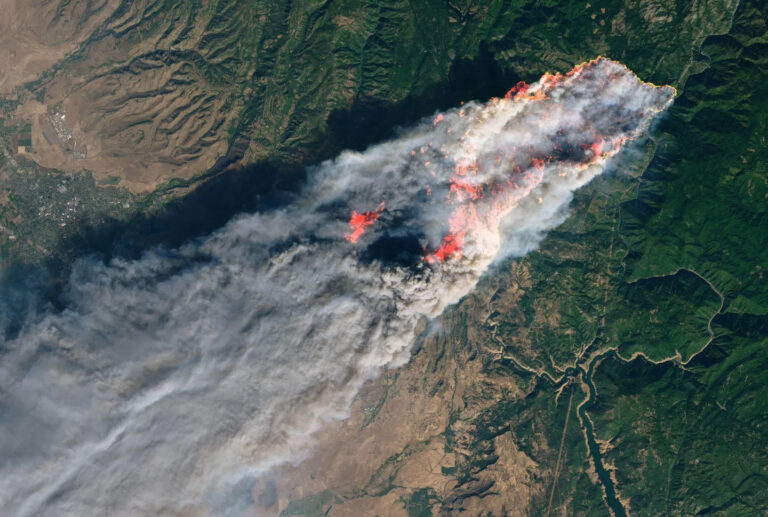
Conservation X Labs is a nonprofit organization working to prevent the sixth mass extinction--the potential for ecological destruction driven by human activity. ESAL had the chance to talk to Liam Torpy, who led Conservation X Labs’ Fire Grand Challenge from August 2024 until its conclusion in January 2026. The Fire Grand Challenge was an open competition to develop innovative solutions for wildfire mitigation and prevention. After a 9-month field testing period, one Grand Prize winner and two runner-up teams were crowned. The winners will receive continued support to further scale and deploy their technologies. Liam shared his learnings from the Challenge and the different resources offered by Conservation X Labs.

Can you tell us about yourself and Conservation X Labs?
Conservation X Labs is a nonprofit organization focused on addressing the underlying drivers of extinction. We work at the intersection of conservation, technology, and innovation. We try to address these problems by developing in-house technologies and using open innovation prizes and challenges, where we harness talent from around the world to come up with new solutions. Then we incentivize and work to scale those solutions.
Fire is one of those drivers of extinction and that’s why we held the Fire Grand Challenge, with a focus on western North America. I served as the Challenge program manager, where I ran the day-to-day, guided the design, managed partnerships, and interfaced with finalists.
What were some of the issues the Fire Grand Challenge was trying to address?
The fire crisis here and around the world is incredibly complex and driven by a number of factors. In western North America, one of the main problems is fire suppression, where we have supplanted the traditions of indigenous people who used regular burning for millenia to manage the landscape. Fire suppression causes a buildup of fuel in ecosystems across the region. Invasive species are often more flammable and increase fuel load. Climate change is another driving factor where drought and extreme weather have led to fires in LA and Hawaii. We have also seen more interfacing between urban areas, suburban areas, and “wild lands” than ever before. These have combined to create an intense matrix of issues that seem intractable, but we have the tools to solve.
Right now, you have to pay to take away biomass and trees that are overcrowding the landscape. Without tapping into market forces, you can’t address the problem at scale, because there are hundreds of millions of acres. How do you create profit from sources of forest residuals? Can you restructure the economies of communities to generate revenue through forest management?
The good news is there are a lot of great innovators out there. Through the Challenge, we aimed to uplift their work and connect them to partners and funders.
How did the Challenge work and what was that process like?
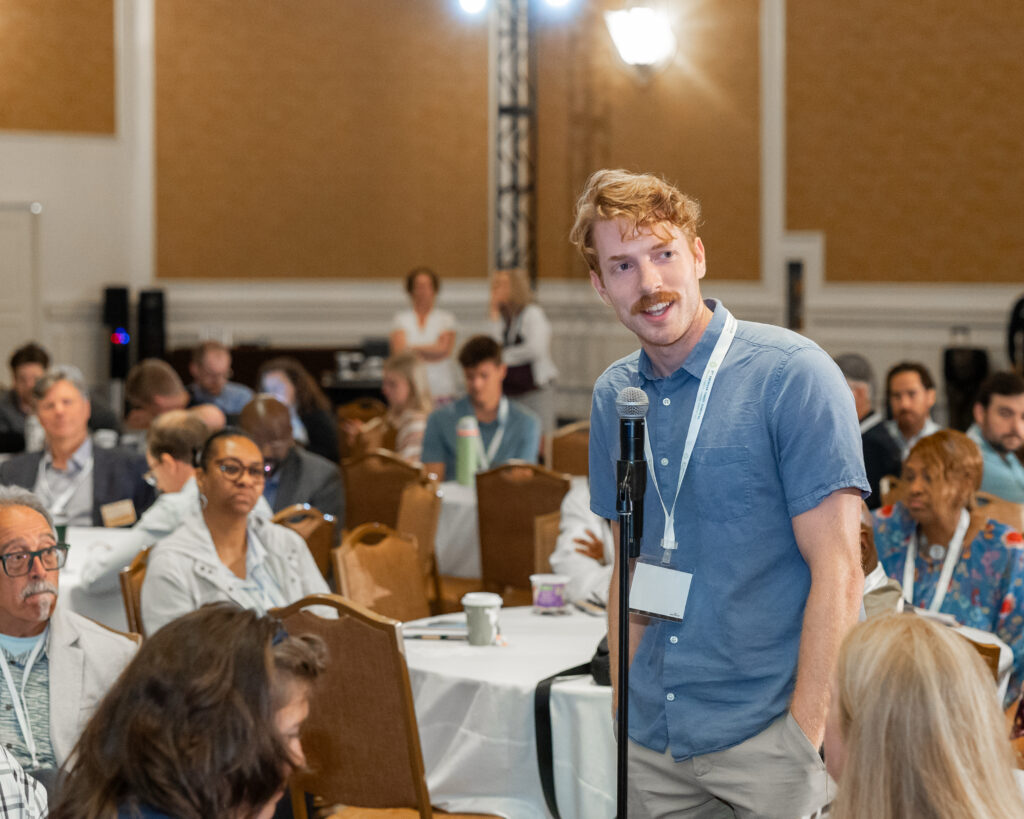
There were two applicant tracks: technical applicants who provided innovation proposals, and partner communities who codeveloped and helped field test those proposals. We created a matchmaking process for those two parties--the technical applicant and partner community. After forming a team, they created a joint field testing plan. The top finalists went through an accelerator program with workshops on topics like technological development, social and environmental impact, and financial sustainability. They then field tested and learned over 9 months. We connected them to mentors, press opportunities, and potential funders--really the resources needed to scale. Finally, an expert panel of judges reviewed and selected 3 winners, with the top team winning $100,000 and two runner-up teams $50,000 each. We wanted it to be a collaborative experience, not just competitive, even though competition added to the fun.
How were local governments involved?
We had some local governments get involved as partner communities. They ranged from municipalities such as Paradise, CA to small neighborhood groups in Louisville, CO, all the way to communities in the San Juan Islands in Washington, the First Nations of Canada, the Modoc Nation, Washoe Tribe, and southern Mexico. We were really lucky that the Challenge received such a great response.
Field testing on the ground also involved working with local governments. Because you have to work with the air districts to do prescribed burns. You have to work with local agencies to get approval for the field testing.
What are some of the technologies and tools that Conservation X Labs has helped develop?
Wild Me is one of our in-house tools that’s open source. If a conservationist uploads a photo, AI powered algorithms can identify the species and then reidentify specific individuals to help with population tracking and management. It’s used by thousands of scientists and communities across the world.
Sentinel is a similar AI tool but has a hardware component. We just deployed it in New Zealand, where it's being used on their 3rd largest island. New Zealand has spent millions of dollars trying to eradicate invasive species on this island, and with Sentinel, they can receive real-time alerts on whether the invasive species are present again. They can then send a team to extract those species before they're able to reestablish.
NABIT (nucleic acid barcode identification toolkit) is a handheld DNA testing device that can tell you whether a species is present or not within 30 minutes. Normally you'd have to bring a sample to a DNA lab, which could take up to 48 hours. In areas like the Amazon, it's not feasible to get perishable samples to a lab. With this toolkit, people can develop their own tests, which will help with onsite tracking of wildlife and zoonotic or plant pathogens.
We try to provide tools that can democratize data and increase the efficiency of conservationists, decreasing the amount of time they have to put into management.
How important is communication and getting the word out?
On the open innovation side, so much of it is getting the word out and focusing attention on these issues. We’re not just trying to bring solutions to market, but to shift how people look at the issue.
With fire suppression, oftentimes we’re stuck in a trap we can’t get out of. People are scared of fire, so we need to tell the story of beneficial fire in a fire-adapted landscape and uplift indigenous and rural practitioners. We need to gain social license from the public to do what we need to protect our communities.
You can follow Conservation X Labs on social media:
Are you involved with an organization or effort that you think might be of interest to the ESAL community? Or have heard about an organization or initiative that you’d like to learn more about? Let us know here, and we may feature it in a future post.