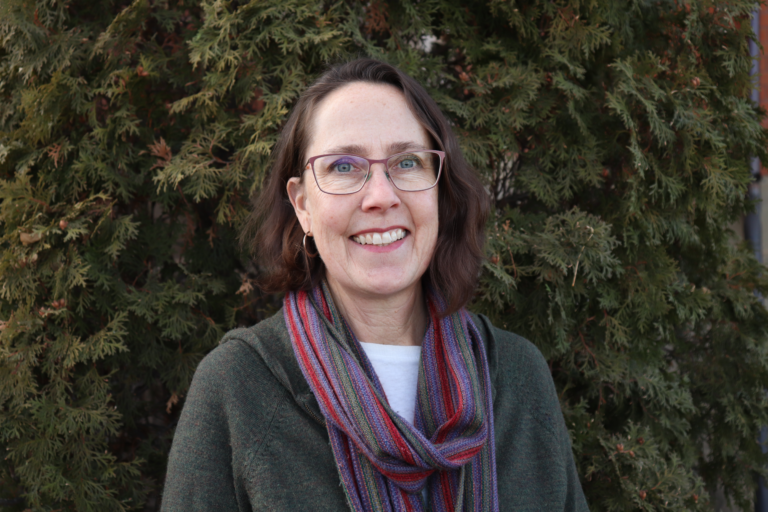
Alison Ormsby currently serves as the associate director of design at Adventure Scientists, where she develops global citizen science projects that connect volunteers with large-scale conservation research. She holds a Ph.D. in environmental studies from Antioch University New England and has spent more than two decades teaching environmental studies and sustainability, including leading study-abroad programs in many different countries.
Beyond her professional work, Ormsby remains deeply engaged in environmental policy and community advocacy, regularly sharing her expertise through volunteer opportunities, podcasts, public outreach and international travel, which has spanned more than 55 countries.
This interview has been edited for content and clarity.
JL: Can you walk us through how a conservation question turns into a fully designed Adventure Scientists research project?
Ormsby: Adventure Scientists is a multifaceted organization that develops and implements citizen science projects around the world. We focus on four core areas—forests, freshwater, biodiversity, and climate—and partner with nonprofit organizations, businesses, government agencies, and academic researchers who need lots of data points.
Typically, a partner comes to us with a research question and a need for data that would be difficult or expensive to collect at scale. We work with them to design a project that trained volunteers can carry out in the field. If the partner already has methods, we refine them; if not, we help develop the data collection protocols from scratch. Every project must have a clear theory of change, often informing policy, protecting a species, or supporting the creation of a conservation area.
One of the most unique aspects of Adventure Scientists is that the data is collected entirely by trained volunteers. People sign up, complete an online training program, pass a certification quiz, and then contribute to projects in their region. We currently have thousands of volunteers around the world. It’s a powerful way to connect everyday people directly with meaningful environmental research and conservation work.
JL: How did your academic career shape the way you approach your work at Adventure Scientists?
Ormsby: For 20 years, research and project design were central to my professorship, particularly as part of the tenure process. I collaborated extensively with students and colleagues around the world on environmental research, so designing studies and thinking rigorously about methods now comes very naturally to me. While teaching in Florida, I participated in a citizen science project about beach-nesting birds, and later at UNC Asheville, I created and taught a course devoted entirely to the topic of citizen or community science. These experiences played a major role in my being hired for this position at Adventure Scientists.
Beyond research, teaching study-abroad courses was especially formative for me. I am a strong believer in the value of cultural immersion: learning another language, experiencing what it means to be a guest in another country, and viewing environmental challenges through a local lens. I made a point of working with host-country stakeholders by inviting local guest speakers, organizing homestays, and connecting students with local conservation efforts. My goal was to expose students to real-world environmental work and possible career paths while highlighting the incredible work already happening on the ground. That’s one reason I find citizen science so exciting; it gives people a direct way to engage locally and see the impact of their efforts.
I also worked as a journalist with Earth Negotiations Bulletin, a publication run by a non-profit organization (IISD) that reports on United Nations environmental treaty negotiations. Like conservation research, environmental policy requires people with different perspectives to work toward shared goals and make compromises along the way. That same philosophy continues to guide my work at Adventure Scientists, where we hope to translate citizen participation into lasting changes in personal choices and actions. After each project, we survey volunteers to ask whether their involvement influenced their habits or career paths. It’s inspiring to see how often people report making changes in their lives after participating. While our projects focus on natural science, evaluating those personal outcomes helps us understand the broader impact of engaging communities in conservation.
JL: How do organizations typically partner with Adventure Scientists?
Ormsby: Our executive director often meets corporate and nonprofit partners at conventions or speaking events like our recent talk at the Explorer’s Club, where mission-driven businesses are looking for meaningful ways to support conservation work. Sometimes a partner comes to us with a specific research question and a need for large-scale data sets to support their work. Other times, a company might support a project through sponsorship, equipment for volunteers, lab analysis, or marketing. For example, companies working in areas like environmental DNA (eDNA) analysis may collaborate with us by helping process the samples our volunteers collect.
Every project has a live data dashboard that shows where volunteers are needed and where projects are currently active, so it is easy for people to see opportunities in their region. One of my favorite ongoing efforts is our Tree Tracking work, where each year we focus on a different species with the help of strong conservation partners. These projects have already helped protect forests and raise awareness about the scale of illegal deforestation, which many people do not realize is a threat in many of our national forests. Citizen scientists play a direct role in collecting the data that helps address these challenges and are supported by the partners who help translate that information into research, policy, and on-the-ground conservation action.
JL: Adventure Scientists generates large, volunteer-driven datasets—how are these ultimately used by researchers and policymakers?
Ormsby: Every project involves developing a mobile app that volunteers use to collect data in the field. That information feeds into a live data dashboard, where we review and clean the data, like removing outliers or entries that don’t meet the project protocols, to ensure the final dataset is accurate and reliable. Interested researchers can request access through our website. In general, we believe strongly in open-access data and encourage partners to share it widely whenever possible to contribute to publications and inform policy recommendations.
One example of our research archive came from our global microplastics project, which collected water samples around the world to measure the presence of microplastics. At the time, it produced the largest dataset of its kind and it continues to be one of our most frequently requested datasets by interested organizations and governments. That project helped demonstrate the global scale of microplastic pollution and continues to support ongoing research into its environmental and health impacts.
Some datasets take longer than others to process, particularly when lab analysis is involved. For example, for some of the species in our multi-year Tree Tracking Program, volunteers collected leaves from species like black walnut and eastern white oak and mailed them to the U.S. Forest Service genetics lab in Corvallis, Oregon for analysis. Researchers then created DNA “fingerprints” for individual trees. That genetic database can be used to trace illegally harvested wood back to its origin within about eleven kilometers, and it has already been used as court evidence in legal cases to prosecute suspected timber poaching. Volunteers made a huge impact just by collecting leaves while they’re out hiking, showcasing the strength of citizen science.
JL: What current or upcoming projects are you especially excited about?
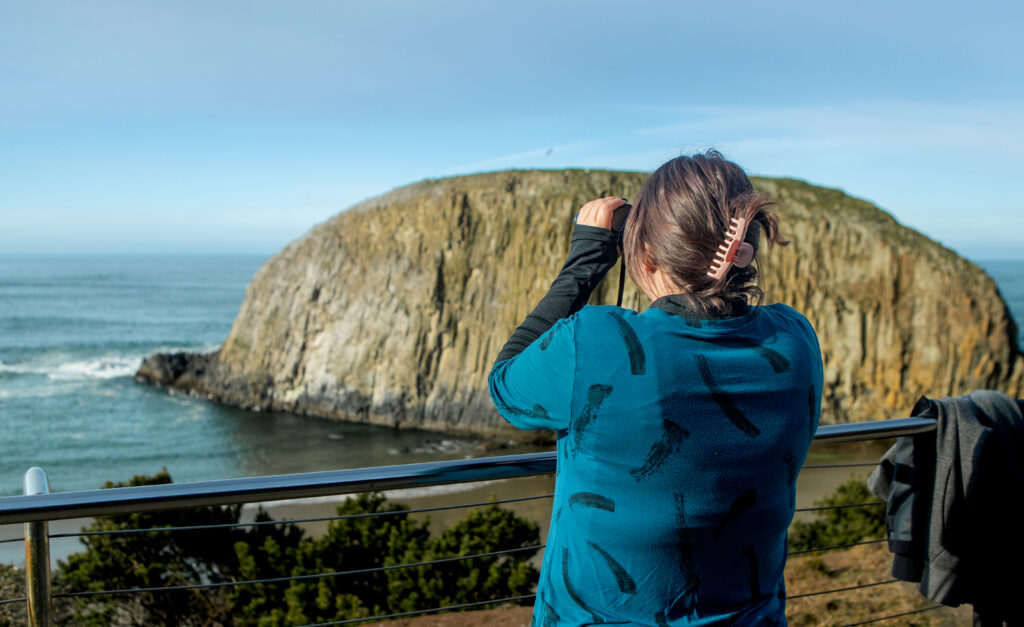
Ormsby: One of our most exciting current projects is Searching for Killer Whales along the Oregon coast. There’s a well-known population of southern resident killer whales that travel along the West Coast, and while there is strong data from Washington and some from California, there has historically been a major data gap in Oregon. The coastline there is rugged and the weather can be challenging, which makes systematic monitoring difficult. Right now, we have hundreds of volunteers working to document sightings, and that data will go directly to the Oregon Department of Fish and Wildlife and NOAA. It will help inform state and federal management plans, especially efforts to identify critical habitat and understand how close whales are to shore. In the future, this could even support outreach tools that alert boaters when whales are nearby so they can adjust their course and avoid disturbing them.
We’re also working on a Tracking Whitebark Pine project in Washington and Oregon. Whitebark pine is a high-elevation tree species that has been listed as threatened due to disease and mountain pine beetles. Volunteers help locate trees, record their health, and note whether they’re producing cones. That information allows the Forest Service and the Whitebark Pine Ecosystem Foundation to identify healthy trees and collect cones for reforestation and seedling programs.
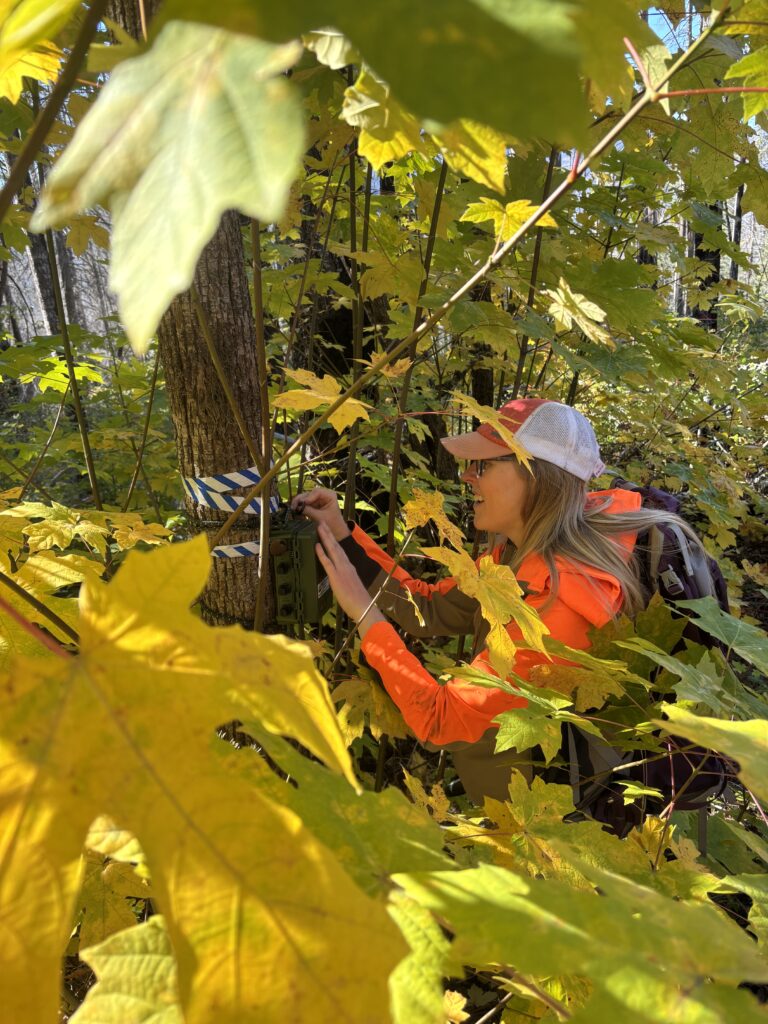
Our most recent project has just launched, Preserving Pacific Northwest Forest Biodiversity. Volunteers in western Oregon, western Washington, and northwestern California can help with acoustic monitoring of wildlife. The project requires off-trail navigation and is a unique chance to explore parts of the Pacific northwest that few ever see.
Our future opportunities are announced through our newsletter, which is the best way for volunteers to stay informed about upcoming projects.
JL: How can I become a citizen scientist?
Ormsby: The best first step is to sign up for our newsletter and then register for a project. Once someone signs up, they gain access to the training materials and can decide whether a project is a good fit for them. We want participation to feel approachable and flexible, and the training ensures volunteers feel confident before heading into the field with a friend.
We always encourage people to explore the website, sign up for updates, follow us on social media (@adventurescientists) and reach out if they have ideas for conservation projects. If you know of a possible project where volunteers can help collect data at scale, we want to hear about it!
Do you have a story to tell about your own local engagement or of someone you know? Please submit your idea here , and we will help you develop and share your story for our series.