The Baker Institute for Public Policy (the Baker Institute) is a non-profit, nonpartisan policy research organization based at Rice University in Houston, Texas. We reached out to learn ways in which scientific expertise can shape policy decision-making processes as well as to explore frequent challenges and ways to overcome them.
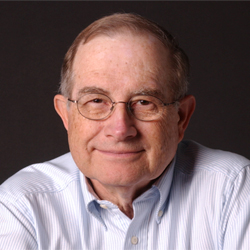
Neal F. Lane, Ph.D., is the senior fellow in science and technology policy at the Baker Institute. He previously served as director of the White House Office of Science and Technology Policy (OSTP) and the National Science Foundation (NSF). Read the full bio.
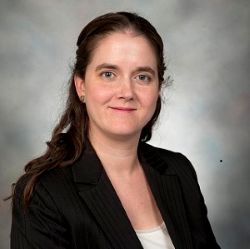
Kirstin R.W. Matthews, Ph.D., is the senior fellow in science and technology policy and the director of the Baker Institute Science and Technology Policy Program. Read the full bio.
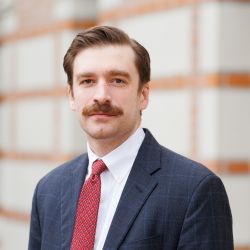
Kenny Evans, Ph.D., is a fellow in science, technology and innovation policy at the Baker Institute and assistant director for innovation policy at Rice Innovation. Read the full bio.
This interview has been edited for clarity and length.
Thank you all for joining this interview. Many STEM professionals are beginning to explore different ways in which they can use their scientific expertise to shape their local communities and beyond. Can you help us understand the work that the Science and Technology Program does at the Baker Institute?
Lane: Engaging the larger public, including political leaders, in conversations about science, why it matters, and how it improves people's lives is something scientists haven't always had a lot of practice doing. That's the gap our work tries to close.
Matthews: The centerpiece of that work is our Civic Scientist Program, which began about 20 years ago. It began as a lecture series bringing in high-profile scientists like a former NSF director. It's grown from there into helping Houston-area scientists engage with schools and communities.
What is a civic scientist and how does that play out?
Lane: A civic scientist is a scientist, engineer, or technical professional who gets out into society and engages the public—at every level, including in D.C. where Evans is in. That's different from a "citizen scientist," which generally describes people who do not necessarily have the scientific training doing hands-on scientific work, like measuring the temperature of Houston’s Bayou system. It came from a speech my speechwriter drafted for me years ago, when I was NSF Director, for a talk to the Arlington Rotary Club. I just talked about the idea, but it was her words.
Evans: One thing I've found working in D.C. is there's no single way to be a civic scientist. And this pluralism is actually a strength. Whether it's someone like Lane who served at the highest levels of federal science leadership, or someone like Matthews who built a program from scratch at a university, the system benefits from having all of it.
From a succinct term to a well-developed program, the Civic Scientist Program has certainly grown over time. Can you explain how it has evolved to bring more STEM professionals into that role?
Matthews: Beyond the lecture series, we've run a Civic Scientist Leadership course for graduate students, walking them through what science policy actually is and giving them hands-on opportunities to write op-eds and one-pagers that promote science as a public good. Even as some students stayed in research, others chose to remain in science policy work.
What do STEM professionals engaging to shape policy decision-making process actually look like? I’ve often imagined a grassroot-like movement where a group of independent scientists bring to the authorities certain problems with proposed solutions.
Lane: Science policy is an extraordinarily broad topic, and there's no single right way to do it. It happens both bottom-up and top-down. Early in my career, I'd join other research physicists and go to Washington just to ask our representatives for more funding for science. Other times you're invited to testify before a committee, or contribute to a formal study through the National Academies. But the throughline is this: you don't wait to be invited. If you want to influence policy, you find every way you can to plug in. If one way doesn't work, you try another.
What are some challenges during such engagement and in what ways can you overcome them?
Matthews: I’d say communication is a big one. You really have to meet people where they are. Strip out the jargon for accessibility, make sure you're not signaling a partisan lens in how you frame an issue. As a trained biologist myself, this means distilling the essence to help others who may not have dealt with science since high school biology. One example I point to is when the Supreme Court was deciding whether to keep a gene patent, the OSTP at the White House wrote briefs explaining the science using an analogy of a raw piece of wood versus a carved baseball bat. You can't patent the wood, but you can patent the bat. That kind of intentional framing that meets your audience where they are is what actually gets picked up by non-scientists making high-stakes decisions.
If you could give one advice to a STEM professional interested in getting involved in shaping policy decision-making processes, what would it be?
Matthews: You don't have to leave your current career to get involved. Vote, and talk to your elected officials. Follow the front sections of journals to read about policy in the front section of “Science” and “Nature” to stay current. Write an op-ed if that interests you.
Evans: And reach out directly. Especially for students or for early career professionals, cold-email and ask for a coffee chat. I was fortunate to get mentorship advice from Matthews. I’ve found that being able to find people that can help you along the way and be in your corner is invaluable. Organizing locally matters too, whether that's a graduate student policy club, a group like the Scientist Network Advancing Policy, or just getting together to follow the news as a group. I think there's real power in numbers.
Do you have a story to tell about your own local engagement or of someone you know? Please submit your idea here , and we will help you develop and share your story for our series.