This year, the United States marks its 250th anniversary. As part of the America 250 commemorations, ESAL is examining the role science has played in American society: in shaping our democracy, our communities, and the decisions we face together. This installment reaches back further than the founding, to scientific traditions on this continent that are older than the republic itself and still very much alive.
What is science? In the Western tradition, the answer seems settled: a hypothesis tested through observation. But that definition is far younger than the ways of knowing that Indigenous peoples have practiced for thousands of years. Long before the founders drafted a constitution inspired by Enlightenment science, Indigenous peoples were observing, testing, and communicating knowledge of the lands and waters of North America.
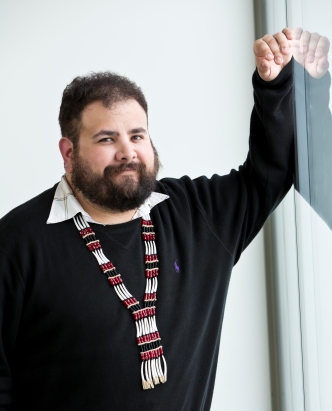
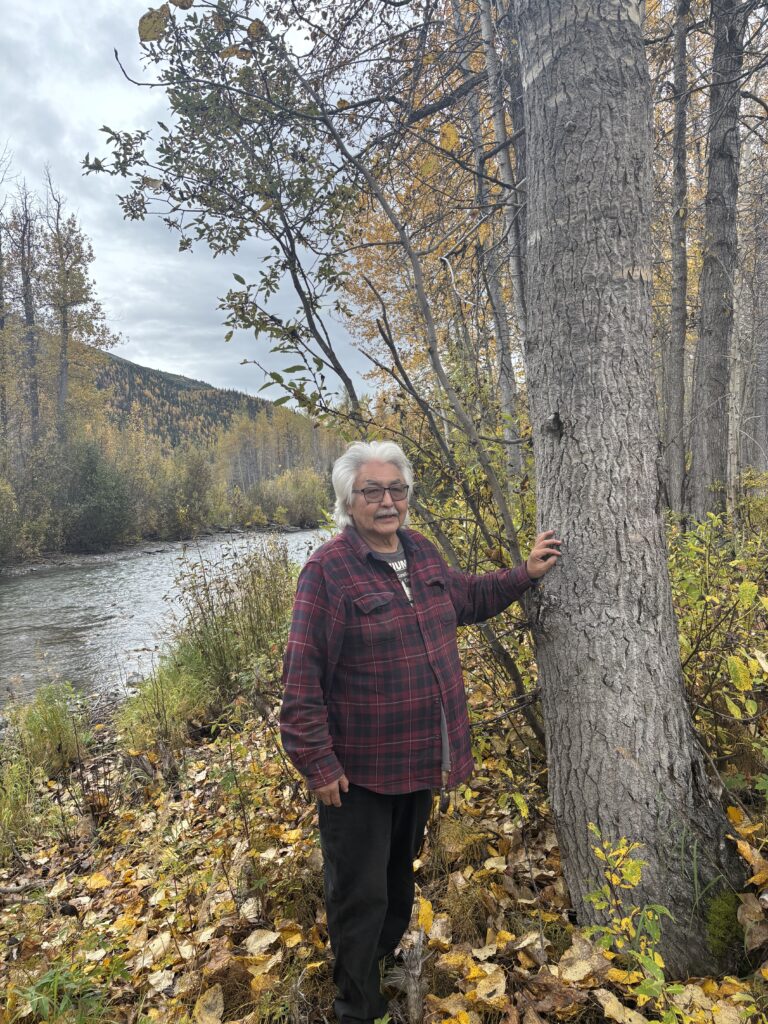
To explore what those systems can teach us, especially as we face decisions about climate change, ESAL spoke with three Indigenous knowledge-holders: Jill Sherman-Warne, a citizen of the Hoopa Valley Tribe of northern California and executive director of the Native American Environmental Protection Coalition; Aaron Leggett, a citizen of the Native Village of Eklutna, Dena’ina Athabascan, president (first chief) of its Tribal Council, and senior curator of Alaska History and Indigenous Cultures at the Anchorage Museum; and Wilson Justin, a citizen of the Cheesh’na Tribe of Chistochina, Alaska, and a culture-bearer of Ahtna Dene’ traditions.
Four themes emerged from our conversations: observation is inseparable from values, values change how resources are managed, knowledge lives in language and story, and all of it converges on how communities make decisions.
In traditional Tribal systems, seeking knowledge through observation is inextricably linked with values and culture.
“We don’t think of it as science, but as observing the world around us and trying to assign understanding and meaning,” said Aaron Leggett. “You can’t separate the beliefs and knowledge, tradition and ‘science’.” He compared Western and Tribal ways of learning. “In the Western world, you have what are considered indisputable truths of science – the theory of relativity and gravity and so forth. But that is based on a belief system, the belief in fundamental principles. Then you have an explanation of the world that comes from theology to explain certain phenomena.” Those ways of ascribing meaning can be at odds in the Western world, but they are not in Dena’ina knowledge systems.
Wilson Justin drew the distinction more sharply, emphasizing the purpose of science. “What the white man calls scientific is geared towards his ability to gain,” he said. “Ours is geared towards making decisions that would allow us to be a participant today but not take that right away for tomorrow.”
Central to that is conveying respect about being part of a bigger world. “Fundamentally, the biggest thing is getting some of the values out there – respect for the environment, respect for animals and plants, good human tenets,” said Aaron Leggett. “You’re not trying to conquer nature; you’re working with it.”
What does observation joined to respect look like in practice? Jill Sherman-Warne gave one example: “When you harvest mushrooms, make sure you are leaving spores, leave the bottom behind. You can’t just take all of it. It’s also for our other relatives, the winged relatives, the root nation, the trees, the four-legged. Also for the little people, we believe in little people.”
Wilson Justin gave another, stating “The observational skills for someone like me have nothing to do with what I see. The observations in Western data-driven society say you gotta see it first; we say you don’t gotta see it at all, you gotta hear it first. My uncle told me you have to learn to see with your ear and hear with your eyes otherwise you miss it all.”
“Learn the interaction between the birds and the lakes and everything else. There is always an exchange out there in the landscape among the dwellers. Anyone can hear a loon on a lake. But loons only speak up under certain conditions at the end of the lake for certain reasons. They don’t just go around quacking. You learn after a while that sounds are exchanges. Changes in even a little thing, like a little bit of different sound at the head of the valley, will alert you. Maybe a fox or coyote, but something stirring, putting everything on alert up the valley a mile or two, is a willful mountain grizzly bear. So long before you see things, you know they are coming around. Your preparation then is about whether you have certain materials you put in the campfire when a strange or new bear comes into the area that alerts it that you are there, telling them not to come charging in. So things like that, you learn the universal thread that runs through traditional systems, that gives you observational skills almost impossible to replicate or to illuminate to people who have never heard things like that.”
Is this science? Jill Sherman-Warne rejected the premise that the newer tradition gets to decide. “‘Science’ is not ten thousand years old,” she said. “Take your science and try to use a Tribal lens of thousands of years of management, without having equations. Our observation and knowledge obtained through that will always be science, hands down.”
If observation is rooted in values, what does that change about action? The clearest answers come from how these three communities manage land.
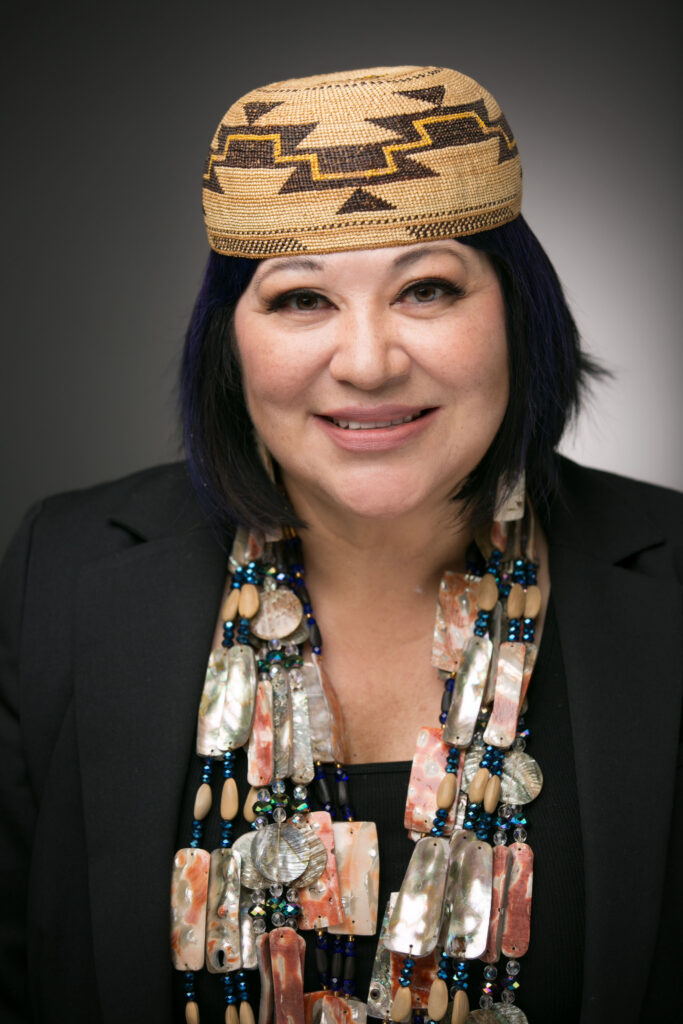
Jill Sherman-Warne reflected on how her people used to manage it. “This used to be Mexico,” she said. “When the Jesuit priests landed, the Spaniards, they talked about how beautifully maintained it was, like a King’s park it was that manicured looking. And that was because we managed the land with fires, that kept the insects away. Now we’re dealing with golden spotted oak borer, bark beetle, they would have been kept in check through fire. Science is finally backing up what Tribal people have known all along, using fire as a management tool.”
Although the re-introduction of Tribal use of fire as a tool for land management is in its infancy, forest management is still a priority for the Hoopa Valley Tribe. “If you asked most communities what their assets are, they would say that our fire station down the road is an asset, our school. They would look at infrastructure and buildings as assets,” said Jill Sherman-Warne. “Tribal people look at resource management through a very different lens, grounded in culture and traditions.”
That lens has been tested in court. “The Hoopa Tribe has had a forest management plan since the early 1980s. Parts of the reservation are held by non-natives. When the forest management plan was being developed, we made a VHS tape and sent it to every single box holder on the reservation so they could play it and make comments, even the non-natives. All of the big decisions that the tribe makes requires community engagement. It’s going to be a community that ultimately protects the resources. There were notices on the radio and in the newspaper and public meetings. And people wanted a cultural protection zone. Some of our highest ceremonial areas are in the forest lands and these are the places we want protected. But one non-Tribal member had land inside our cultural protection zone. She had all these opportunities to comment and chose not to. Then she started cutting trees and the Tribe stopped her. The Tribe offered to pay her fair market value for the land but she wanted to fight all the way. We went all the way to the Supreme Court and they upheld our Hoopa Tribal Forest Management Plan. We won.”
Two thousand miles north, the same values meet a very different legal landscape. In Alaska, there are no reservations. Instead, Alaska Natives received about 10% of the state of Alaska in 1971 and were compensated just under $1 billion to create 12 regional Native corporations and about 200 smaller corporations. One of them is Eklutna, Inc., the village corporation for the people of the Native Village of Eklutna. They had to think about how to leverage lands while maintaining their values.
“We became one of the largest private landholders in the city of Anchorage. Maybe 93,000 acres,” said Aaron Leggett. “But our philosophy is to not sell the land; in twenty years we’ve sold maybe 500 acres. We technically sold 700-800 acres to become a conservation easement. We can access those lands and use them as we always have. We can harvest, hunt, berry pick, put a tent up for a few days, we just can’t build any permanent structures. That’s an example of our values. It was a big decision to do this.”
For Wilson Justin, values-based management goes deeper than plans and easements, it reframes the harvest itself as a matter of permission and consent, rather than allocation. “You can’t think of seasons,” he said, referring to the way resource managers impose hunting and fishing seasons. “We will never be able to satisfy greed, so we need to get away from decision-making processes that are dependent on greed. Everything should be dependent on what will be available for four generations.” This echoes the Hoopa Valley method of harvesting.
He explained what permission and consent look like in practice. “If you were to go get a moose for your family for the winter, first maybe the little chickadee would tell you that this is the time to greet the harvest season, then maybe by your campfire the Canadian jays would be there, the moose or caribou or sheep send them to you to let you know they are ready to offer their time to your family’s welfare. It’s complex and it’s about the Tribe’s well-being, not ‘I get what I need’.”
Aaron Leggett described a Dena’ina expression of the same relationship, a way of honoring the salmon that sustained his people. “In the summer when the first king salmon was caught there was a ceremony, with specific songs,” he said. “The fish would be cut up in a ritual way and every person in the community got a little part of it, it was honoring the survival of another year, the fish are coming back.”
How does knowledge like this survive across generations? In Tribal systems, it is embedded in and passed on through language, place names and storytelling. The natural world was observed and knowledge passed on for thousands of years before the invention of writing.
“Dena’ina Athabascans are so tied to place that it becomes embedded in our descriptions of phenomenon,” said Aaron Leggett. “Descriptive, not honorific.”
Even the calendar is a record of observation. “The calendar describes what is going on around us,” he continued. “Instead of naming days and months after Roman gods and Germanic languages (like. Thor’s day) we have ‘King Salmon month’ roughly around June, ‘Berries become ripe month’, ‘the month horns are shed’, ‘the month that leaves fall’ or ‘the month that birds fly back’, ‘the month bears turn over’. That’s scientific knowledge being transferred. When I started learning the language it was like a key was unlocked, it made so much sense.”
“Descriptive” can be very specific and practical. Aaron Leggett noted that the Yup’ik book “The Way We Genuinely Live: Masterworks of Yup’ik Science and Survival” breaks down scientific principles and puts them into the context of Indigenous knowledge and understanding of phenomenon. He specifically cited a section on using your body to create kayaks. “So there’s a frame for the kayak and then arm measurements and so on and it will be tailor made to fit you. It breaks it down. There’s thousands of examples. Sea ice construction, weather patterns.”
If language carries the knowledge, story is how it is taught. “My grandfather came to live with us when I was 11,” said Jill Sherman-Warne. “Traditional knowledge was passed down, most often it was around the kitchen table or mealtime when the family was together. We’re talking and sharing stories and I just assumed that everybody had family meals that were three hours long. Really engaging with each other. If we were coming into spring, the conversation may have been around fishing and the spring salmon, getting prepared for those things. So one of the stories we have is about Frog. Frogs will sing when lamprey fish are coming into the river. So we can rely on frogs telling us lamprey will be coming and then we start to fish. We don’t go into the whole entomology discussion about frogs. It’s the same as with mushrooms. We know they grow after the first rain. Not a mist, more like a Seattle rain in the fall when it’s getting colder. Rain comes, then sun comes out and its really warm and humid environment of water, the warmth of the sun, the mushrooms just pop out. November, late October, and they’re only good until the first frost. That’s just knowledge passed down.”
Storytelling is not only a vessel for practical knowledge; it is a formal curriculum, structured across the year. “Traditional knowledge sharing was built around stories and lessons derived from story and storytelling,” said Wilson Justin. Not only what was in the stories, but even the sequence of stories was important for learning your place in society, how to act. “It’s not about books and data. Through storytelling cycles the issue and question of having to make decisions are always a part of your being.”
He described two such cycles. “The storytelling cycle under the December moon is the most important one, that’s really related to the question of dealing with extinction issues. We learn not to give in to fear. When extinction events occur, the language has to change in order to deal with that event. It makes no difference whether it’s saber-toothed tiger or glacial ages or what they call the time of no summer which was the volcanic ash covering the planet. Secondary time of winter storytelling in January, Riddle Moon month. The riddle of human nature. How come when things go really good we turn ourselves around and make it go bad. That’s the fundamental lesson of that month of storytelling. Nobody is out there ruining the planet, ruining us. It’s we who are doing it, so the January Riddle Moon is about the complexity of human nature. What kind of decision-making process do you need to utilize to be able to wander through all of that.”
Stories about extinction under the December moon. Stories about human nature under the January Riddle Moon. It is hard to hear these descriptions and not think of the present. Some of the biggest decisions that need to be made now and in the near future are around climate change: how to slow it, how to adapt to it, how to experience it, how to slow extinction. It is worth exploring the question: is it possible that tackling climate change requires us to develop Indigenous observation methods and values?
The three knowledge-holders have already watched climate disasters that their traditions anticipated. In California, it is wildfires. “I look at areas I go to through a Tribal lens,” said Jill Sherman-Warne, “and I’m like this is a mess, a fire is gonna come through here. And Pacific Palisades fire, I was in that area about two years before and I was telling the person I was with, oh my god this place is a match! People better appreciate their homes now because if a wildfire ever came through here this place would be devastated, I literally said that out loud. And I was recently in Sherman Oaks, another kind of high-end place on the other side of Pacific Palisades, and I’m like didn’t they learn anything, this place is a match! Wildfire’s gonna come in here and blow them out of their socks. They halted burning because of the air quality, I get it. But the reality is your burn is much more dangerous and toxic when wildfire just decides to come and enrage.”
“I don’t think anyone in Sherman Oaks would listen if I said to them Tribal people have burnt down this place. All the people with money want wisteria. They want their oak trees, shade trees, but they’re living in a desert. They fail to recognize LA is a desert. It’s gonna dry in the desert sun in summer then fall is gonna come along and the winds, the idea of a red flag warning.”
“Tribes never had a red flag warning. Our techniques and knowledge have stood the test of time.”
In Alaska, it is thawing ground. Tribal people were observing signs of climate change about two decades after World War II brought the Alaska Highway, major roads, and an influx of settlers to the area — and just a decade or so before the 800-mile-long oil pipeline was built from the North Slope. Wilson Justin remembered watching it begin.
“When I was growing up, permafrost was very thick under the moss. The moss was really thick and really easy to play on because it was very bouncy. And we could see a long ways because there was not much growth because the permafrost was 2-3 feet thick, sometimes 20 feet thick. When it was hot in the summer we would go lay on the moss and it would be cool and we never thought that was exceptional.”
“When I was about 10 or 12 years old, probably 1960-1964, my aunts and uncles began to point to the moss or the leaves on a tree and the grass on the side of the creek and say something is not right, something is wrong here. I kept that in the back of my mind because I had no idea why they were talking like that. Spring was luscious and warm.”
“The older people would say we used to have winter and we used to have summer and once in a while spring but not so long. The permafrost began to get lighter and lighter and the moss began to change faster and faster. So by around 1967, my aunt Lena, she would say when we were out caribou hunting, someday them caribous are going to move someplace else. By the time I was 30 the moss instead of being really deep green would be light brown. I would dig underneath and there would be dirt or moisture. When permafrost began to go, when it began to disappear from climate change, everything began to change abruptly, including what was here, what wasn’t, and things like that.”
When Wilson Justin observed the people around him noticing changes, saying the animals they relied on were going to move on, there was a story to help them: the practice of the December moon cycle for understanding extinction, the practice of January Riddle Month exploring human nature. And there was language — layers of it, calibrated to convey the seriousness of instruction, discussion and decision-making.
“We had different levels of languages. The everyday language was where you give instructions to kids, like to go help out your aunt on cutting wood or hauling water,” explained Wilson Justin. Then around the dinner table or campfire, around family, language conveyed an element of respect. The third level, the teaching language, was related to the responsibility of aunts and uncles to ensure “their nieces and nephews moved into our world with a way of seeing and hearing instructions and teachings that would allow them to participate without wrecking things up.” Following that was the governance-level language, used for decisions and decision-making processes, to ensure fairness. Lastly was the language utilized to settle things, negotiate. “It ends wars and arguments, it settles matters,” said Wilson Justin. “It’s used a lot in the old days. A strict, complex way of speaking. All about making sure that when things go wrong you don’t have people blaming each other for the next 30 years; once it’s settled once it’s settled for all.”
Measured against that architecture, he found the language of the dominant culture unequal to the moment. “In English there is no way to accommodate climate change, because the English language just says it doesn’t exist or it’s somebody’s fault. There is no real discussion of what we do in terms of 7.5 billion people looking at certain extinction features.”
Jill Sherman-Warne’s words emphasized this modality: a scientific culture built around attack and defense rather than settlement. “Scientists say that even good science is defensible,” she said. “Meaning somebody’s going to attack it. Defensible data, meaning we know it has to be attacked for it to be good.”
How would we as scientists wrestle with climate change if we were as embedded in the communities around us as Tribal perspectives are embedded with the two-legged, the winged, the four-legged, the tree nation and others? How would we engage in language and decision-making? It’s worth reflecting on the words of Wilson Justin: “Long before contact and a little after contact, the issue of dealing with other people, other friends, before wars, in a ceremonial way, you offer what we would refer to as an apology. You apologize ahead of time knowing that you will be a part of that harm.”
Do we take the time to really observe the natural world, deeply think about human nature, consider the degree to which our work and decisions are for status or gain? When we work in community, do we include the root nation and rivers and future beings in our definition of community? The ways in which Indigenous communities bring their Traditions into the Western scientific world are too numerous to detail here. They are putting modern tools to use to advance their values: to create marine sanctuaries, sea gardens, wildlife overpasses along highways; to bring fish and wildlife back from near-extinction; to bring infrastructure and power to communities; to address wildfire and climate. They are working in the fields of health, energy, agriculture, and many more.
In science, who gets to ask the question matters because people bring their own experiences, value systems, and ways of knowing with them. When we participate in our communities, these matter too.