Deep Dive on the scientific workforce

Everyone knows it’s impossible to accomplish anything in scientific research without a tremendous amount of work. Yet in the traditional view, handed down through legends about great scientists of the past, science wasn’t work at all; rather it was a kind of inspired play that yielded the intellectual and perhaps spiritual rewards that can only come through original scientific discovery. Stories are told of Ernest Lawrence, the American Nobel laureate physicist, working in his lab around the clock, seven days a week. Lab workers were expected to put in 70-hour shifts, but many had fond memories of Lawrence dropping in to chat any hour of the day or night, intrigued by the challenges his young assistants were working on. No regular hours, no publication pressure, just a circle of brilliant minds working together to unlock nature’s deepest secrets. Paradise!

Compare that to contemporary science: a world of intense competitive pressures,strict hierarchical teams, and frequently all the difficulties and discontents that go along with working for a living anywhere: salary, benefits, job security, work-life balance, career advancement. Early career scientists, especially, say the old scientific training system, where you earned a PhD in graduate school, put in a few years as a postdoc in someone else’s lab, then eventually went on to run a lab of your own seems further and further out of reach. What happened?
To investigate these changes, ESAL hosted a discussion featuring four panelists, all of them differently positioned to observe the vast changes taking place in working conditions in the sciences. Host Tony Van Witsen opened the discussion with some revealing numbers about today’s scientific workforce. A survey by the National Postdoctoral Association showed 86.6%of postdocs who responded were worried about job security. 87.4%were impacted by lack of clarity about their time as a postdoc. 94.5% said they were impacted by lack of clarity about their next position. Almost 95% said their professional and personal lives were most negatively impacted by their salary. 

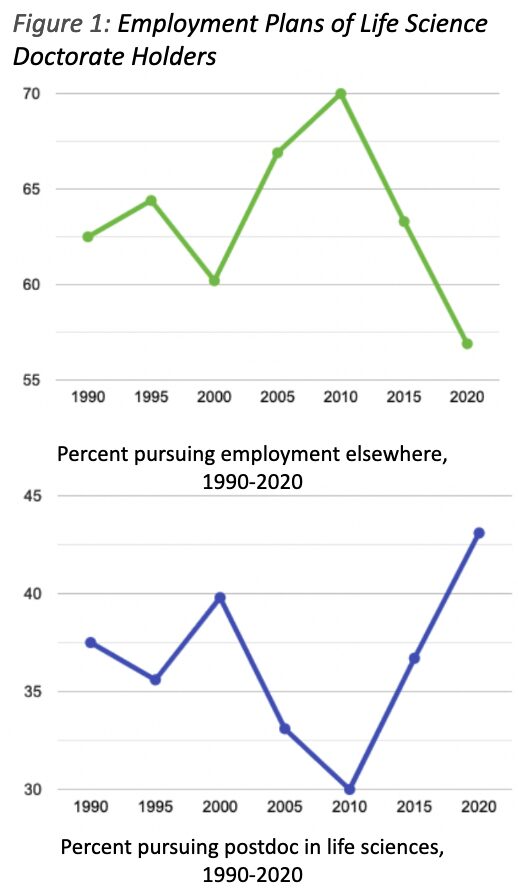
Consistent with those views, figures from the National Science Foundation’s annual survey of earned doctorates show a decreasing number of life science doctorate holders planning to pursue postdoctoral training and an increasing number leaving academia to pursue employment elsewhere. The lines made by the graphs of these two trends are almost perfect mirror images (Figure 1). In 2022, the percent leaving reached 53%, meaning it was literally off the chart. Anecdotal reports also indicate that many lab heads, the principal investigators (PIs), struggle to find enough qualified postdocs to fill the jobs they have at the salaries they can afford to pay.  

What is driving this wave of discontent? ”The key thing,” said panelist John Walsh, a science policy scholar at Georgia Tech, “is the changing organization of academic scientific work. Science is increasingly organized around larger and larger research teams.  Those generate a growing need for supporting members on the team.” In Walsh’s view, the hierarchy is built into the way contemporary scientific research is organized. “If you’re in this structure, we can’t all be head of a ten-person lab.”

When Walsh examined thousands of scientific papers over a period of decades, he found a pattern of increasing dominance of science by a smaller number of lead authors and a larger and larger number of supporting team members. A kind of emerging scientific class structure. Over the years, Walsh found an increasing number of scientists, mostly the supporting team members, were exiting the field. Lead authors gradually acquired significantly higher production and collaboration rates than supporting authors, who, over time, worked on fewer papers with fewer collaborators. 

Complementing that global view, panelist Esra Yalcin talked about the challenges of daily life for postdoctoral scholars. Yalcin, a neuroscientist, is president of the Boston Postdoctoral Association, as well as a former postdoctoral research fellow at Boston Children’s Hospital. “I am coming from the very bottom of this hierarchy,” she said, adding personal testimony to the  statistics about low pay. “Imagine that you’re 30 years of age. You’re about to start a family, but after holding a PhD degree, you’re still earning slightly above the low-income rate where you’re living. We found 20% of postdocs are parents. Childcare consumes one parent’s salary in Boston. Add other consumables, formula, other stuff the baby would need, it became impossible. It was evident that postdoc parents need some additional support.”  

Panelist Holden Thorp, who currently serves as editor-in-chief of Science magazine, also  spent a decade as chancellor of the University of North Carolina and was provost of Washington University in St. Louis as well. As a seasoned academic administrator, he believes the current problems afflicting the scientific workforce are symptoms of deeper institutional dysfunction. “The administration and the really powerful PIs don't want to deal with this,” he said. “Nobody wants to say, ‘Hey, we, we take advantage of all these people in order to get these wonderful discoveries that we're constantly bragging about.’ The solution is for administrators to pay attention. But if they do, their board's going to say, ‘Why are you doing that?’ Boards don’t do anything hard until they have to.”

The difficult career problems of young scientists land on the desk of Daniel Olson Bang, who has spent a decade at Syracuse University helping graduate students and postdoctoral scholars find ways to overcome these professional challenges. He says scientists in training often spend such long hours focused on their work that they wind up socially isolated, unable to see other career paths. “They know their PI, the lab mates, and that's it,” he says. “Many people, especially when you've gotten to the postdoc period, have spent so much time in what I would call an academic normative language that speaks about an academic, tenure track position as what you'll do. People far along in their programs don't really have a vocabulary or awareness of what else they might do.“

Thorp and Yalcin both recognized the relative powerlessness of the early career researcher and strongly criticized scientific institutions that preside over present working arrangements. Apologizing for her bluntness, Yalcin said, “This way of postdoc salaries coming from the PI's grant is, unfortunately, an opportunity to abuse the postdoc because it's uncontrolled money. The money goes into a gray zone where the institution doesn't owe you because the institution doesn't pay your salary. NIH doesn't have a system to protect the well-being of the postdocs.” 

“As Dr. Yalcin said,” Thorp added, “The institution can't implement the fine ideas that John Walsh had, because it doesn't address where the power lies in the institution.” Thorp believes the growth of organizations like Yalcin’s, the Boston Postdoctoral Association, are symptoms of a deeper problem. “Higher education is under enormous strain,” he said. “The first question would be, how you're going to make life better for the students, staff and faculty. I think it's going to be hard, but there's a chance that that could happen, given all of the noise that's out there. Something has to give.”

“There are difficulties figuring out what to do if you don't end up as the hotshot PI, but want to continue and do the research that you've signed up for.” Olson Bang added.  “That's a very hard topic to talk about. Is there a viable other tier? Are there research institutes where you can do the things you signed up for?”

The most visible evidence of early career scientist discontent has been the wave of union organizing and strikes taking place at campuses across the country. Most members, as well as those doing the organizing, have been graduate students and postdocs, a group not traditionally known for their  political engagement. In that sense, the rise of labor organizing represents something completely unprecedented in American science. The trend has accelerated in the last two years, and encompassed some of the highest-profile, most prestigious institutions. AtUniversity of California, 48,000 postdocs, teaching assistants and researchers went on strike at ten campuses and Lawrence Berkeley National Laboratory last year. Other unions have targeted MIT, Cornell, Northeastern, Yale, the University of Chicago, Stanford, NYU, the National Institutes of Health as well as Weill Cornell Medical College and Mount Sinai School of medicine in New York. Most of these organizing efforts have happened since 2022, suggesting that this wave of unionization isn’t over.

Much of this organizing is focused around economic issues, particularly salary, but power imbalances between workers and supervisors are also important. A survey by the Caltech Grad Researchers and Postdocs union found more than 46% had experienced or witnessed bullying behavior, sexual harassment or discrimination of some kind. “When there is misconduct in a lab setting, your first channel supposedly is within the institution,” Yalcin said. “But obviously the institution is in a conflict of interest with themselves and with the PI.”

“Nothing made me angrier, when I was a provost,” Thorp said, “than for a graduate student to come to me and say, ‘I want to go to industry, and I told my PI this, and now he won't talk to me.’ I wish I could say that doesn't happen, but it does. And the administration cannot disabuse people of it. They don't have the leverage to do it anyway, because a lot of these folks are bringing big grants in and making the institution look good.”

Yalcin explicitly chose to help organize the Boston Postdoctoral Association rather than a traditional labor union. She felt that approach promised a better, more immediate answer to the problems of Boston area researchers even though she’s pro-union in principle. “I think a lot of it tracks with what’s gone on in the broader career world post-pandemic,” Olson Bang says of the organizing efforts. “There's a belief among postdocs and others that they should be able to get part of that too. The fact that there is already an unfair structure that doesn't pay them a living wage just adds fuel to the fire.”

Walsh believes science must abandon the idea that everyone needs to aim at becoming a principal investigator—hotshot or not—and instead, embrace the emerging two-tiered workforce structure. “We need to do more to support supporting scientists as a legitimate career path,” he says. “We need to rethink the careers and the job stability of this kind of scientific work, create career ladders similar to the tenure track faculty. We need to increase the legitimacy of this.”

View the full event recording on ESAL's YouTube channel.  
Navigating the Future of AI in Washington State

The Washington State Academy of Sciences' 17th Annual Symposium, held on Sept. 25, 2024, and themed "AI to Explore, Discover, and Understand," provided a deep dive into the multifaceted world of artificial intelligence (AI). From the impact of AI on scientific research and health care to its potential for addressing environmental challenges and ethical concerns, the symposium covered a vast spectrum of topics, showing Washington state's AI landscape and its possibilities.

Keynote: Navigating the Frontiers of Scientific Advising on AI

National Academy of Science President Marcia McNutt's keynote set the stage, emphasizing the potential of AI to revolutionize scientific research, education, and policymaking. McNutt discussed the need for responsible AI development, addressing safety concerns, and fostering international cooperation. Her insights highlighted the complex landscape of AI, where technological advancement needs to be coupled with responsible governance and ethical considerations.

AI's Role in Climate, Healthcare, and Sustainability

Several panels were focused on the application of AI in climate modeling, wildfire prediction, rural healthcare, and agricultural advancements.

The Ethical Implications and Future of AI

The final discussion of the symposium centered on the ethical implications and future directions of AI. Key points included:

Key Themes and Takeaways

Local Engagement Opportunities

Conclusion

The 17th Annual Symposium offered a comprehensive overview of the AI landscape in Washington state, highlighting both the potential and the challenges that lie ahead. It underscored the importance of responsible AI development, ethical considerations, and community engagement in shaping the future of AI. As Washington state continues to advance in AI, it is imperative for individuals, organizations, and policymakers to collaborate and actively participate in shaping a future where AI benefits all.

Science Kits: Fostering STEM Learning During Lockdown for Hayward Students

Four years ago, when Stuart Loebl taught biology at Kennedy High School in Richmond, California, he noticed a disconcerting trend. A third of his students were reading at a fifth-grade level or below, and many had never taken a real science class before. It marked a turning point in Loebl’s career: he decided to work with younger students to ensure that they could reach high school science classes with the skills necessary to succeed. Now, as a teacher at Lorin Eden Elementary School in the Hayward Unified School District, Loebl with the guidance of teacher Nancy Wright have started a Science Kit program to encourage hands-on, inquiry-based investigations. The kits are one example of how the Hayward Unified School District is striving to provide deeper learning experiences that are engaging, equitable, and provide students the tools that they need to think critically, consistent with their Strategic Plan for the next three years. With distance learning during the 2020-2021 academic year, the kits have provided much needed materials to cultivate learning at home. Loebl and Wright spoke with ESAL about how the kits were developed and the impact they were having on students.

CK: What is your current role as an educator?

Loebl: I've been teaching at Lorin Eden Elementary School for the past two years. I teach about 327 adorable little kids in first through sixth grade. I teach some of the most fundamental levels of science. We do plantings to learn about photosynthesis. We learn about magnets and forces and earth structures. It's great! But mostly what I work on with them is getting them to think like a scientist in terms of using their observational skills and figuring out to test ideas.

CK: How did you develop the idea for Science Kits?

Science Kits being packaged for students.

Loebl: A lot of school districts are talking about how they're trying to prioritize STEM, but I don't see that happening for the younger students. There's still such a focus on English and math, which is important, but it's also not all that we should be teaching these kids at these young ages. This is especially true given that science is an opportunity to apply math and the language arts. So these Science Kits are going to be an opportunity to engage the teachers who are not doing a lot of science teaching and get them to start thinking about how to put that into their curriculum.

Wright: Every student in Hayward deserves a science education that prepares them for a future in STEM. Distance learning does not change this. We needed to ensure that students got the science education that they deserve, one in which allows them to engage in science and engineering practices with hands-on materials. These kits allow students to develop critical thinking and problem solving skills, as well as organizational skills as they deepen their science understanding. Students will understand that science doesn’t just happen in a science lab, but that science is all around us. Students are empowered to do science at home with these kits. This is the first step in getting students to see themselves as scientists.

CK: What are Science Kits?

Loebl: We have some of what maybe might be considered the most basic things for engineering and crafting, such as tape, string, and rubber bands, which are great for learning about sounds and vibrations. We have these items in the kits because although you might assume most kids have these materials at home already, many just don’t. We have pipettes in the kits too because we want students to be comfortable transferring liquids from one space to another. The kits are also for learning how to use the tools of science.

Thinking back again to my Kennedy days, a lot of my students just didn't have the basic understanding of how to measure something. If you ask a student to pour out 20 milliliters of liquid, it would take them a very long time to be able to figure that out because they hadn't really done that before. So we're giving them cups that have measuring lines on them so they can practice that skill. When they get to high school chemistry, they will know how to do that and they can pass that class. In my pilot kit, that I gave out to my students at Lorin Eden, there were over a hundred materials. The kits for the whole Hayward district have been reduced to the absolute most essential objects, because as we scaled up, we needed to make sure every material was easy to assemble and cheap. The kits are all under $5 and there are 34 materials in there.

CK: Can you go in specifics about at least one project?

Loebl: One of my favorite experiments is having the students think through conductivity. We have given students things to make ice in the kits because about a third of my students don't have either ice makers or ice cube trays in their freezers. We ask them to make two ice cubes that are of the same size and have them touch something that's metal and something that is wood or foam. We have them guess which material is going to melt the ice faster. Inevitably, students think that the ice is going to melt faster on the foam or the wood, because that feels warmer than the metal, but of course it’s the opposite.

Another project I enjoy teaching is one about material science in which we use ping pong balls and golf balls. The two balls are of similar volume, but obviously have very different densities. Just on such a basic level, we want the student to push them around and realize that you need a little bit more force for the golf ball and the ping pong ball. And then we’ll move to more interesting experiments about gravity and Galileo where we drop both the balls at the same times and see which will hit the ground first.

CK: How many students use the kits and what are the major goals of the kits?

Loebl: There are roughly 12,000 elementary students in Hayward Unified School District. Currently 4,000 students will be getting these kits, so we are covering about one third of elementary students. I'm hoping to increase that number to 8,000. One of the major goals of the kits is to cultivate students as investigators and as scientists. I feel very strongly that the way to learn these skills is through hands-on experiential approaches. The lessons that I remember from when I was a kid are those kinds of lessons. For example, I remember sitting down in second grade and being given a whole bunch of magnets. I was playing around with them and figuring out polarities. In my opinion, science is not best taught as a lecture. It needs to be something that you can try out yourself. That insight was really, really important to me as we went into distance learning. I was trying to figure out how to retain this essential element of what teaching science is all about when kids just don't have the materials we would typically be able to provide to them in school.

The district has provided $30,000 for the kits. About a third of the cost of the kits is for professional development for teachers. We spent a lot of time considering how we don't want the kits to be sent out and then for families to get these materials and not really know what to do with them. We spent time developing with teachers how to utilize these kits in their curriculum. Elementary teachers routinely ask for science curriculum materials and professional development. This program will provide all three of those, as we are going to be supporting every teacher who receives the kit with paid professional development and an open source digital library of lessons.

Wright: Distance learning has been challenging for a variety of reasons, but that doesn’t mean that students shouldn’t be building a strong science foundation in elementary school. Science enhances critical thinking, cultivates a passion for learning, and promotes reading, writing, and math skills. Ideally, students would have access to meaningful, hands-on science investigations, but that is difficult to ensure when students are at home. These kits allow students to have the materials that they need to engage in science safely at home. Teachers will also get the resources they need to support their students' science learning, including professional development, lessons, and collaboration. One major goal of this project is to support teachers and students as they transition their science teaching and learning to alignment with the Next Generation Science Standards, which promotes a new way of teaching and learning that allows students to actively do and experience science in a deep, meaningful way, not just learn about it from a textbook or a lecture. My vision for this project is to cultivate a passion for science education among teachers and students that will endure long past the time we return to in-person learning.

CK: What kind of feedback have you received from your students about the kits?

Loebl: They love it. They're constantly thinking through different ways that they can learn. I've been getting videos from students about them doing this and that kind of experiment. In my original kits, we gave them food dye and there was a student who sent me a video of them mixing the water with food dye and oil with their parents. They saw clearly how those two different liquids don't mix.

I think that parents really, really appreciate the kits because I’m not just throwing materials at my students but providing activities and lessons and ways to think through concepts. And I think parents appreciate during lockdown that they can still be guided through ways of thinking through science. They can do activities with their kids and stay engaged.

Physician and Computer Scientist Fights for Healthcare Access and Equity in her Community

Varsha Chauhan graduated as a physician from India and joined the University of Urbana-Champaign to complete a master's in computer science, and shortly after a master’s in healthcare administration. She has a wide-ranging background in public health, health IT, and health systems administration, alongside having held numerous roles inclusive of CEO, Chief of Health, executive director, city commissioner, and most recently she was elected Board member of Eden Health District. ESAL interviewed Chauhan to learn more about how she has woven government and community engagement throughout her career.

RD: How did you get to where you are today?

Chauhan: Due to digital evolution in the 90’s, I decided to move from medicine to computers as the health IT field began to emerge. I became interested in this area following my work in a free health clinic serving homeless folk, located in San Francisco. My experience at the ground level was extremely eye-opening and I could see the work that was needed to develop healthcare systems to ensure accessibility to all patients. I then worked as a director to improve the quality of care, before moving to chief operating officer where I helped with the implementation of electronic health records (EHRs) in a variety of clinics. Shortly after, I became an executive director for Alameda County where my focus pivoted to supporting the entire county health system. Thereafter, I joined the state of Oregon as chief health officer, where I worked to bring back the Medicaid system to support the 1.5 million people in the state without health insurance. At present, I work for a long-term acute care hospital as CEO for the past three years in the Bay Area.

RD: Given your diverse background, how did you become interested in engaging outside STEM?

Chauhan: I became curious about opportunities in the healthcare world and started becoming more proactive in searching for them. I undertook classes and obtained experience to become a Lean Six Sigma Master Black Belt – which is a methodology that aims to promote an environment of continuous process improvement with a focus on eliminating defects, variation, and waste. Furthermore, in the 90’s people were talking about EHR’s, but this was still something that was being passed on. It was one of the main reasons I started to become engaged outside of STEM, as I believed at some point healthcare would need to integrate with health IT.

RD: How did you become involved in policy and community engagement?

Chauhan: I had always shied away from politics, as I was not a political person. However, once I was on the other side of the table and working for the state, I was able to use my training and experience to help improve things. Also, may I add, it does not necessarily have to be healthcare, you can support policy efforts in any domain!

As I have been running a hospital – which requires managing people as well as billions of dollars – aspects such as financial planning were extremely important. When I finished studying my master’s I decided I did not want a conventional STEM job, and that is when I started looking for opportunities in the community. This is where I came across the community services commission, and once I got into that, I ran for election to become a Board Member for the Eden township district. I was successful in this endeavor and was elected late last year. It was just one door after another, and that is how it happened. I just want to do something more!

RD: How did you get inspired to take on this work?

Chauhan: The inspiration came from listening to the stories of those people who could not get health insurance during my work as chief of health. I learnt firsthand how the lack of an inclusive system impacted numerous lives. This was definitely the driving force. Having learnt how there were communities that I could support and contribute to, I decided to take this route.

RD: Where do you picture yourself in 5 to 10 years?

Chauhan: There are dreams and there are visions. I never thought I would be running a campaign, let alone winning. When I look to the future, I want to be in a position where I can bring to the forefront the needs of the people in healthcare and those who need mental health support.

On the other hand, I have a passion for animals. From my travels I have seen dogs on the streets who had suffered abuse. I hope to go and buy land and help open shelters in such countries to rescue these animals. It is something I have wanted to do for years!

RD: What advice do you have for other scientists and engineers who wish to get involved?

Chauhan: Healthcare is a very complex system, and it does not have to be that way. There is so much fragmentation and breakdown in communication, which makes the experience in healthcare unpleasant. At present, the progress within healthcare towards harmonization is slow, however steps are being taken to create a coordinated healthcare system throughout the country. Thus, alongside their current work, scientists and engineers could endeavor to look into coordination tools that would help healthcare coordinate.

Students Respond to COVID in Their Communities

“Our expertise is science; their expertise is what they need.” This statement by panelist Elina Kostyanovskaya referred to the importance of listening to vulnerable communities. It was one of several key takeaways from the webinar “STEM Students Responding to COVID in their Communities,” which was jointly hosted by ESAL and the National Science Policy Network on November 18. 

The webinar featured three students who have spearheaded efforts to tackle challenges arising from the pandemic, including Kostyanovskaya from the Science Policy Group at the University of California, San Francisco as well as Serena Wang from CovidSMS and Alexandria Lee from Students vs. Pandemics.

Wang, a 4th year public health major at Johns Hopkins University, sought to fill a critical communication gap. As co-founder of CovidSMS, she helped create a messaging platform that could reach low income and disadvantaged individuals, many of whom do not have a computer or internet access, but often do have a cell phone with texting capability. Local organizations and public agencies use their platform to deliver COVID-related information to subscribers in a specific zip code. In a live demo, Wang showed the ease of using CovidSMS to receive coronavirus data or access resources such as food or rental assistance. (Read more about CovidSMS in ESAL’s interview with Wang.)

Lee, a recent graduate of Harvard’s School of Public Health, started an organization called Students vs. Pandemics together with her sister, who was also a Harvard graduate student at the time. Lee saw the early confusion of the pandemic and realized that a “student-led ecosystem” would have the energy, diversity, and knowledge to help. So far, Students vs. Pandemics has amassed over 500 volunteers across the country. They’ve worked on a variety of projects, including blog posts to break down complex topics, PPE and blood donation drives, surveys of non-English speaking communities, policy memos, and more.

The third speaker was Kostyanovskaya, a biology PhD student at UCSF. She described their initiative, Project Clean Hands, and the subsequent journey of distributing hand sanitizer and informational pamphlets to incarcerated populations. Using their own research labs, the group manufactured hand sanitizer and delivered it to county jails and state prisons across California, often meeting resistance from corrections officials who were skeptical about allowing alcohol (in the form of sanitizer) on the premises. They had to source packaging materials, manage press and publicity, and fundraise on GoFundMe — ultimately distributing over 45,000 bottles of hand sanitizer.

Both Wang of CovidSMS and Lee of Students vs. Pandemics believe there will be a place for their respective platforms once the pandemic is over. Wang sees SMS communication as continuing to provide a lifeline for populations without internet access. Lee added, “there are plenty of social challenges left to address and students are such an incredible source of ideas and manpower.” Lee believes students will remain uniquely positioned to solve monumental issues and hopes her organization can transform into students versus “name your challenge.”

In a hard dose of reality, Kostyanovskaya acknowledged the bureaucratic obstacles of working with jails and prisons, which would disallow aid to incarcerated groups beyond the pandemic. She hopes that incarcerated individuals will not be forgotten once a vaccine is available, because they are especially susceptible to outbreaks. In the future, she hopes government institutions will work to meet their basic health needs. 

A common thread in the success of all three speakers included their ability to: leverage the diverse skills of their academic peers; partner with established community groups; and pay special attention to the needs of disadvantaged populations. These strengths have become a signature of the student COVID-19 response. 

When asked what advice they would give to other scientists, the student speakers encouraged a humanistic approach and advised scientists to get outside their bubble. “A lot of community and public health work is based upon building a relationship of respect, trust, and dignity,” explained Wang. Engaging with your community and local leaders now will make everyone better off in the next crisis.

Innovation Deep Dive: Designing Human-Centered and Equitable Government Services

Amy J. Wilson’s career in technology, social entrepreneurship, and innovation spans the public and private sectors. She is an Aspen Tech Policy Hub Fellow, where she worked on a public engagement platform for the city of Oakland, California. She was a Presidential Innovation Fellow from 2015-2018 and while there founded a shared language for innovation in government and the Better Government Movement. She is the author of the soon-to-be released book, “Empathy for Change: How to Create a More Understanding World.” ESAL interviewed Wilson to learn more about how city governments can use technology and human-centered design to better respond to their residents’ needs and priorities.

AG: What are some of the challenges city governments face, particularly with respect to being responsive to their residents’ needs and priorities?

Amy Wilson

Wilson: City governments lack resources. Staff are well-intentioned, but they just don't have enough people or the budget to accomplish big goals. What I’ve also found is that [government staff] might not know how best to lead in the 21st century. They might not know how to be agile and pivot really quickly, or know how to experiment or collaborate toward an approach that works for their residents. Their mindsets are often fixed when thinking about new ways of approaching a problem and not looking at the possibilities of what could be.

There's a trifecta of methodologies (Human Centered Design, Lean Startup, and Agile) that most local governments need.

AG: These three methodologies are often associated with technologists who want to improve the experience users have with the tools and applications they develop. Are there things that are specific to how you apply these methods in a government setting?

Wilson: These programs are easily used in training, in procurement and acquisitions, and in grant making. Here is a tangible example of something that I did in the federal government that can be extrapolated to local government. In the Better Government Movement we implemented a series of Design Challenges.

We led 40 public servants through a blended learning program to learn these methods while applying them to government-wide problems. It was taught by leading practitioners inside and outside government. We used universal challenges like shifting the focus on customer experience in government: How do you make sure that the public is first and foremost in your decision-making? We explored specific projects while also the internal cultural shift necessary to create a larger movement toward a focus on products, programs and services that work for all people.

AG: Can you make these ideas more concrete for our readers by talking about the project that you did in Oakland as part of your Aspen Tech Hub Policy Fellowship?

Wilson: When I applied to the program, I was inspired by Antoinette Carroll who runs the Creative Reaction Lab in St. Louis, Missouri. She believes that systems of oppression are designed, and you can redesign them to give power to people with lived experience. She devised the Equity-Centered Community Design process to do that. I wanted to create sustainable steps towards more equitable policy, which is where I believe is where deep systemic impact and social change happens.

My chosen project was steeped in empathy: giving a voice to people who are usually underrepresented in the policymaking process. They often don't have the time, resources, or money to come into City Hall and participate in our main democratic processes. Many can't take time off of work, because they may be working two or three jobs. And it can just be intimidating to come to City Hall and go in front of the City Council and state your case. Working with my colleague Mariah Lichtenstern, a native Oaklander with deep empathy and understanding of Oakland, we homed in on East Oakland.

We asked: "How might we use emerging technology to collect information about how [residents] really feel about policies like homelessness and the housing crisis in the Bay Area? Can we capture their stories in a way that can be turned into policies that matter? The project was called People Powered Policy. Our approach was two-pronged: to showcase the needs and desires of the community while shifting the Oakland government's mindset and become empathetic toward these [community] organizations and people.

AG: How did you come up with this idea?

Wilson: We talked to about 50 people from all different sides of the equation: the councilmembers, organizations in East Oakland, residents of Oakland, and government employees who were to implement the approaches we were creating. We wanted to understand how things were working now, but also look at other possibilities to engage and understand how the City of Oakland treats these different groups of residents further.

We even attended a Civic Dinner, where about 10 community members come together over dinner, and they have a facilitated discussion about a topic important in their neighborhoods. We drove into the hills of Oakland and had dinner with native Oaklanders to understand the tension between the flatlands of Oakland, which is where East Oakland is, and the hills. It helped us understand how the City of Oakland prioritizes certain communities over others.

AG: Going back to the platform, can you tell us how cities get the resources to implement something like this?

Wilson: Our Demo Day for this project was the beginning of August [2020]. Right now, you can access our research at People Powered Policy on the Aspen Tech Policy Hub website. There we have our full set of policy briefs, some ways the city can improve their digital and virtual engagement, and a backgrounder on how to create equity-centered two-way communication with all residents, wherever they may be. We have a mock up and an operational plan for how the project may be realized. We created these resources in such a way that could be implemented in any government setting.

All of this work was done prior to the pandemic, and priorities within the governments have shifted dramatically, while also showing the lack of virtual engagement localities actually have with their residents.

Our [Aspen Tech Policy Hub] mentor told us that there's going to be an $80 million shortfall, maybe more, in the local government because of coronavirus, the fires, and a lot of things happening in the area. So we had to figure out how to do this for as little money as possible.

We devised a strategy around a low- or no-cost request for proposals that would leverage the great talent local to Oakland. I developed a relationship with Code for America’s Oakland Brigade, which is called Open Oakland. They are civic technologists who volunteer to build projects for civic institutions. They are an incredible resource in localities everywhere in the US.

AG: Following up on that idea of technologists volunteering with and working for their local government, it occurs to me that a lot of these methodologies you're talking about, even in the private tech sector, are very new. These skills are in high demand. How do you get the tech talent to care about these civic projects?

Wilson: I think our next frontier is to get more people to care about civic issues rather than capitalistic ventures to create more generative work. That's what I understand is the purpose behind the Tech Policy Fellowship--to reimagine how we can regulate and use technology to improve our world, and not ruin it. For many reasons, Silicon Valley and government don't talk to each other and don't speak the same language. We need more people translating between the two languages and raising awareness. National change starts locally, so start there.

While I was in San Francisco I was selected for a first-of-its-kind Stanford class for tech professionals called: Ethics, Public Policy, and Technological Change. It was full of technologists from Google, Facebook, the Kapor Center, and other different organizations. We were grappling with ethics and empathy and how to deal with the major social and climactic issues happening in the world. The theory of change for this class--and for the Fellowship is, if I'm in government, I need to understand tech. But if I'm working in tech, I need to understand how my government works, and how decisions in policy affect us.

AG: That’s an interesting perspective. Often, when people talk about tech and government, the focus is on the need for government to level up and stop using arcane technology. But you’re talking about technologists needing to think more about their civic role.

Wilson: One of my favorite phrases, which come from people who work at the design firm IDEO, is, “Culture change happens because of the movement and not a mandate.” Having led cultures of innovation and change for more than a decade, I viscerally see that. But, it’s also the case that most change efforts fail, because people don’t feel a deep connection to it. Change needs to be participatory. It requires a movement of people to see themselves in that change. And, technology is shoving us in the direction of a new kind of participatory, peer-driven power. And right now we're ripe for deep systemic changes and disruption. That's going to take a deeper understanding of ourselves and our place in the world.

AG: The concepts of change and empathy keep popping up. You have a book coming out soon called "Empathy for Change". Can you please tell us more about it?

Wilson: In 2006, then Senator Barack Obama gave the commencement address at Northwestern University, where he outlined an "empathy deficit" that is happening in the world. Interestingly enough, that same year I left my job to join AmeriCorps to rebuild the Gulf Coast after Hurricane Katrina. I could see the effects of our empathy deficit, which has gotten more pronounced with time.

Back in 2018 I took time off from my career to take a sabbatical and really think deep and hard about this deficit and what it means for the future of our world. The culmination of this work is Empathy for Change, and I truly believe that if we cared more for each other as humans--to have humility, empathy and equity--that we can persevere.

At the beginning of the book I break down empathy into the sum of its parts. If you look at the cover of my book, I have a head, a heart, and a hand in primary colors. It shows the three parts of empathy and how fundamental it is to our existence. The first one is called cognitive empathy, which focuses on understanding somebody’s perspective. The heart is about the emotional connection you have with somebody. The hand is the action--to be there to help each other if needed. That's called Compassionate Empathy. I think we need to get to that third part where we're taking action, which I define as the definition of positive change and innovation today.

On the other hand, we need to have more participatory cultures and systems that distribute power to many and that believe power is unlimited. I've translated that into how you recreate an empathetic culture from the bottom up in a purposeful way, focusing on those three topics which put empathy into action.

AG: When it comes to taking action, do you have any advice on how to get started? I often hear from technologists who want to do something, but they don’t know what they can contribute.

Wilson: I remember one of the first dinners that we had in the Aspen program, the San Jose City Manager told us, “As tech policy experts everybody wants to talk to you in the Bay Area and everywhere. You have a magic wand. Don't be afraid to use it, because you have magic.” That really stuck with me. After that dinner, I often think of my magic wand and am making it my duty to help others recognize their power within--to find their magic wand. Go into your organizations and just start doing things. Even little things can start a movement.

AG: Do you have any specific ideas for little things people can do?

Wilson: A lot of people think that it's the federal government that sets the policies that affects our day-to- day lives. But, at the end of the day, the policies that are set at the local level are the things that are going to change your life.

Local elected officials are there to listen to us. For the most part they want to hear what you have to say. When I talked to some of the council members [in Oakland], they were very open. Even to the idea of wanting to apply artificial intelligence to understand public data. Talking to local officials is a great pathway to getting started. I recommend understanding what matters to you first and then trying to find the people who are doing that in government. They're probably overworked and under-resourced. And they would love to have a conversation with somebody who is willing to collaborate and help create approaches to solve the problems of the community.

AG: That's great advice. And I know it can seem scary and at the same time overly simple... so I think it's really important to share that perspective with readers. Is there anything else you recommend?

Wilson: I would add that it's simple but a necessary action that we must make today. At the beginning of my book, I share this quote from Woodrow Wilson: “You're not here merely to make a living. You are here to make the world live more amply with a finer spirit of hope and achievement. And you impoverish yourself if you forget this errand.” This quote is deeply important to me. It was the inspiration for me to leave the comforts of my life to join AmeriCorps in 2006, and it led me to work in the White House as an entrepreneur-in-residence.

And, as I was [writing my book], I learned that Woodrow Wilson was very racist even for his time. At the same time, this quote also really affected me and led me to do these great things. So I have to hold both of these things to be true. And I think recognizing that ambiguity is important, and recognizing that with each new year and decade we're improving the world because of those noble souls who are shifting the status quo. I don't agree with what his world was like back then and his views, yet the sentiment underneath it is important. I feel like we have a responsibility as citizens in the world to make the world “live more simply with a finer spirit of hope and achievement.” To leave the world a bit better for us being here, and it starts where you live.

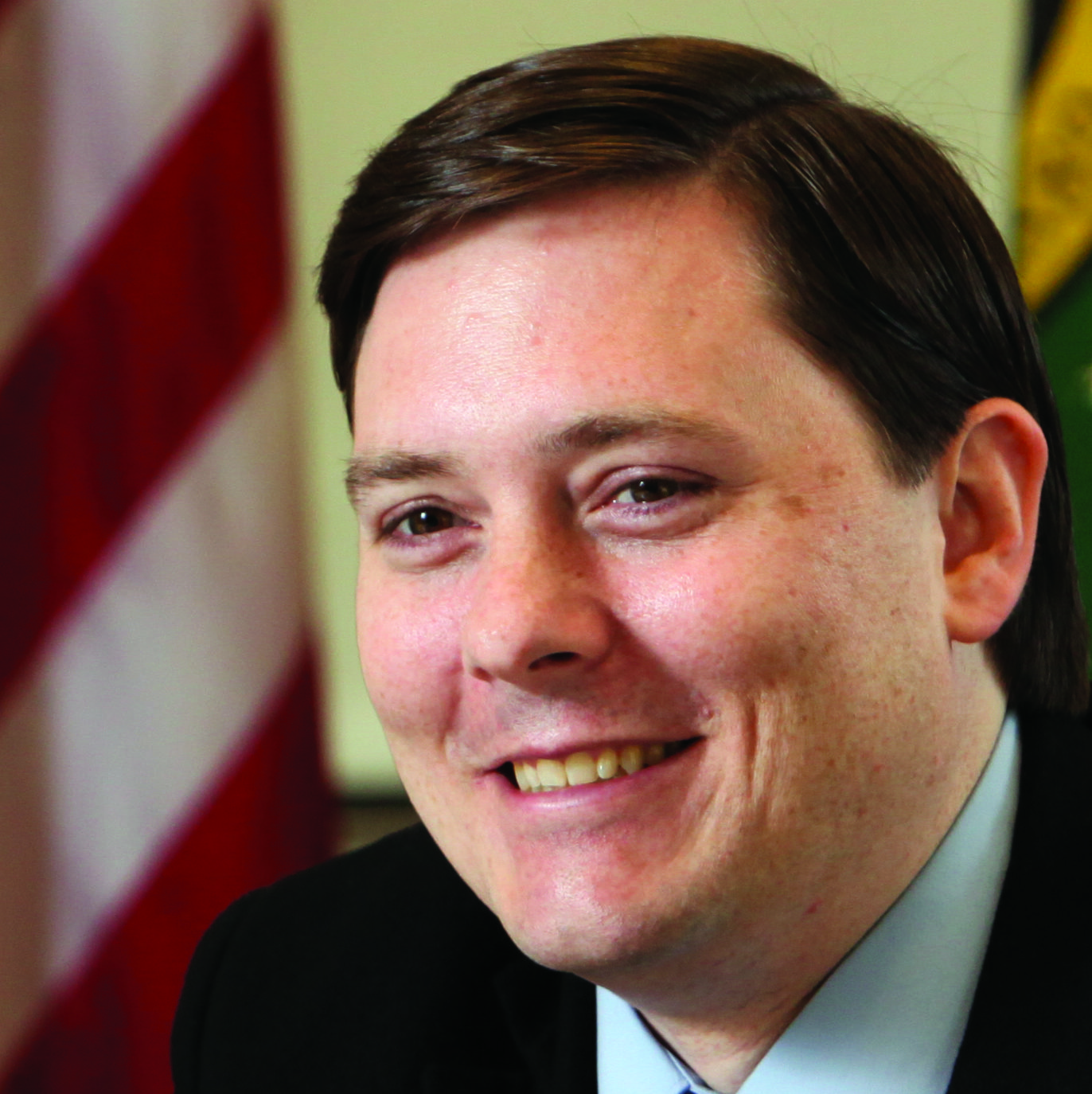
A Data Scientist Goes to the State House

As a statistician and data scientist, I was an unusual candidate for the state legislature. But by the time I filed to run in 2010, I had spent a decade volunteering with advocacy groups and political campaigns and learning in depth about policy areas where I wanted to make a difference. I also knew what to expect in a campaign for State Representative.

Serving as a state legislator isn’t glamorous; it’s a part-time position with low pay which requires many days away from home. Few STEM professionals, especially in a strong job market, choose this path. But I believe that government would benefit if more of us did, and I hope my story will inspire more of you to get involved.

Getting to Know my Community

After grad school I wanted to be more connected to my community, so I started volunteering at a food bank. I was surprised by the breadth of things I learned there: how nonprofit finances work, how food banks collaborate regionally, and the huge amount of effort required to recruit volunteers and raise funds. I also discovered my own passion for learning about how government policy affects community issues. My interest turned out to be not just curiosity but a drive to get involved in government policy for the long haul.

Derek Stanford, Washington State Representative

Through the food bank and several other nonprofit volunteer positions, I learned that I needed to be flexible to make a difference. I did not find a non-profit group that needed a Ph.D. data scientist (although some may), but I found many groups looking for competent volunteers with a can-do attitude. I focused on doing whatever the group needed, whether making deliveries, organizing an office, or planning events. I found that this practical experience is crucial for understanding how an organization really works and for building insight into effective ideas for expansion or improvement.

To explore government, I found that city, county, and state level public meetings were an excellent opportunity to see process in action and to soak up the basics of policy issues. Attendance at these meetings is often light, so I generally felt welcome and appreciated. I once went to a meeting of a city advisory board on technology and felt like everyone was staring at me as soon as I walked in. When I told them that I was just a member of the public interested in learning what was going on, they gave me a hearty welcome, commenting that it had been over a year since their last public visitor.

These meetings are often televised on local cable channels or online, so it is easy to watch and find out if you have an interest in what is going on. But it is also important to show up in person. Not only will the experience be different for you, it also gives everyone else there a chance to see you and interact with you. Informal conversations with people during breaks or after a meeting are times when new connections are made; don’t be shy about expressing your interest in getting more involved.

Preparing to Run for Office

With my growing interest in government, I started volunteering with local political campaigns. This allowed me to explore the nuts and bolts of a campaign so that I could figure out if running was something I wanted to do before putting my name on a ballot. For most local and state level campaigns, the vast majority of effort goes to direct voter contact, so the candidate, every staff person (if there are any), and every volunteer are all focused on knocking on doors, handing out fliers, and making phone calls. You also have to raise money and make yourself accessible to the press and to your constituents.

Although outside the comfort zone of many engineers and scientists, these are skills like any other that you can develop with practice. You don’t have to be good at it before you start; you just have to find opportunities to learn, ask questions, and see how other people do it.

Serving in Public Office

I have served as a State Representative for the 1st legislative district in Washington for seven years, focusing on middle class issues like worker safety, consumer protection, and fully funding our public schools and universities. I’m proud that I helped pass several pieces of landmark legislation, including extending marriage equality to same-sex couples and creating a statewide program for paid family and medical leave.

While my legislative work doesn’t often (or ever) utilize my skills in coding or machine learning, I have found that numerical literacy and the ability to engage in scientific conversations with subject matter experts are incredibly useful skills. The reason this is so important is that elected leaders are frequently required to make policy decisions with limited time and limited information, and this creates an environment ripe for confusion and half-truths to sway policy decisions. We need leaders who can recognize when scientific answers are needed and who can tell the difference between self-serving talking points and an honest assessment of available data.

Climate change policy at the federal level is a well-known example of policy actions stunted by lack of attention to scientific consensus. But I have worked on many areas where science has been successfully incorporated into policy. For example, reducing wolf depredation of livestock requires knowledge of the social structure of wolves; destabilizing their social structure can cause an increase in roaming and predation. Responding to toxic contamination of rural water wells requires understanding the physical mechanisms of runoff from industrial livestock and agriculture operations. Leaders who pay attention to science can easily be the difference between fixing a problem or making it worse

How You Can Make an Impact

There are many ways you can have an impact on policy decisions. Running for office is one way, but you don't need to be elected to make a difference. In fact, being elected means you often don't get to choose what you work on – you are responsible to your constituents for everything they care about. Business groups, advocacy groups, and community groups play a leading role in setting the agenda for politicians; these groups generally define the issues and proposed solutions that get attention from the public and the media.

The most important lesson I’ve learned is that making an impact starts with showing up. Look for nonprofit or political groups working on the issues you care about, and volunteer or go to a meeting. Go see any of your elected officials in action at a public meeting, or find out about city or county boards or commissions. Don’t forget about other local governance bodies, such as water and power districts, library districts, or school boards. You don’t have to be an expert to get started. Just get involved and explore, and you will find opportunities to make a difference.

Global Solutions Start at Home

A version of this post appeared on August 30, 2017 in the Union of Concerned Scientists' blog. The original post can be viewed here. The post is reprinted here with permission.

“Think globally, act locally.”

I first heard this phrase as a child who had just learned about Earth Day at school. To my 11 year old self, it felt empowering; I could help the environment by recycling and conserving water. While the idea of taking action to solve pressing problems continued to inspire me through to adulthood, I’ve recently come to fully appreciate the importance of local action.

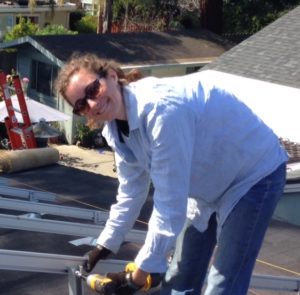
After I had spent several years in Washington, D.C., first as a legislative adviser in Congress and then as an analyst in the White House, life brought me to California where I now work as a technologist. Missing my connection to government, I successfully applied for an appointment to a standing task force in my city, Hayward, California. During this time, part of my technology work has included developing data-enabled solutions for distributed renewables such as rooftop solar and on-site batteries. While I left federal government believing I was leaving behind the ability to significantly impact policy issues that mattered to me, the intersection of my professional and my community work have shown me the importance of local government engagement.

Reflecting on my local engagement, two themes have emerged:

Despite its possibilities, local involvement seems to be the exception for people who are interested in science-related policy. Most of the scientists I know are unaware of how they can become involved locally and don’t realize they can have an impact. For this reason, I founded Engineers & Scientists Acting Locally (ESAL).

ESAL is a non-partisan, non-advocacy organization dedicated to helping engineers & scientists increase their engagement in their city, state, and regional governments and communities. We are currently assessing interests and engagement levels of engineers and scientists. If you are a scientist or engineer, please share your interests and experiences with us through this survey. We also invite you to join our listserv to learn more about our future activities and let us know if you’d like to help expand ESAL.

The work of organizations like UCS helps engineers, scientists, and members of the broader public understand the critical role that science and technology plays across policy issues. This awareness has made technically informed discussions an integral part of policy formulation at the federal level. Local governments also grapple with important science-related issues. By getting involved as an engaged citizen, advocate, and volunteer in your local community, you can help shape local policies that align with global solutions.

Getting Involved in City Government

Aimee Bailey holds the position of Principal, Grid Innovation at EDF Innovation Lab, and has prior energy-related experience in San Francisco Bay Area at PG&E, kWh Analytics, and as a Resource Planner for the City of Palo Alto. In 2012-13 she was a Henry Luce Scholar at the Global Environmental Institute in Beijing. Prior to this, she held a AAAS Science & Technology Policy Fellowship, working in the Solar Energy Technologies Program at the U.S. Department of Energy. Aimee was a "guest of honor" at an ESAL Bay Area event in April.


What is your STEM background, and do you consider your current professional position to be in a STEM field?

I have a B.S.E. in materials science and engineering and a Ph.D. in condensed matter theoretical physics. My current professional position is in a STEM field. I work at the intersection of technology, policy, and business to advance the decarbonization of the energy system.

Have you engaged with your local community?

Yes! I worked at Palo Alto Utilities for more than two years as a resource planner, where I led the strategic plan for local solar energy, managed the emerging technologies program, and carried out strategic analysis to inform development of climate policy. Through that position, I regularly engaged with community members and stakeholders, commissioners, and city council members. As a city staff member, my primary goal was to develop policy proposals for the city council's consideration, and to be a resource to enable city leadership and elected officials to make informed decisions about energy policy.

How did you become interested in local government and civic engagement?

I love Amy Poehler and Parks & Rec.

What do you think is the most rewarding thing about being engaged in communities?

For me, the most rewarding thing about being engaged in local communities is the day-to-day interaction with community members and stakeholders. Local government is messy and involves people sharing their opinions and viewpoints from many different perspectives. I loved the challenge of sorting out the "mess," identifying common ground, and developing creative policies and proposals that effectively took into account the various stakeholders' concerns.

And what is the biggest challenge to having a local impact?

Patience. It can take years to enact change at the local level. Often city councils have many competing priorities, and it may not be possible for city staff and council to immediately review the issue that you care about. Having a local impact is a long-term commitment.

What advice would you give other STEM-trained professionals who want to become more involved and engaged in their local communities?

Please see my "Top Ten Tips for Getting Involved in City Government".

Anything else you'd like to share?

Being a part of your community and engaging in local government is fun. Enjoy it!

STEM-trained Professionals Engaging in their Local Communities

ArtiGarg_KHCG

Arti Garg

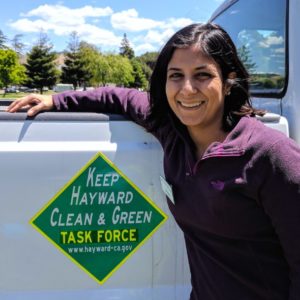
Arti Garg is a data scientist and technologist. She is the founder and Chair of Engineers & Scientists Acting Locally. She serves as a member of the Keep Hayward Clean and Green Task Force in Hayward, Calif. In the past she has served as a legislative adviser in the U.S. House of Representatives, and she oversaw energy-related research investments in the White House Budget Office. She became interested in the intersection between STEM expertise and local policy through her professional work developing smart grid innovation and distributed energy solutions. She holds a PhD in physics and an MS in Aerospace Engineering.

Thank you for visiting Engineers & Scientists Acting Locally! ESAL is an organization dedicated to increasing local civic engagement by STEM-trained (science, technology, engineering, and math) professionals. We are a nonpartisan, non-advocacy group. Our goal is to help you become more involved in your communities by sharing opportunities, organizing events, and providing you with practical information and a forum for sharing ideas and seeking advice.

I am a physicist-turned-technologist, by way of being a policy analyst in Washington, DC. I currently serve on a standing task force with my city government. I founded ESAL to build connections with other STEM-professionals similarly involved in their communities and to help others who would like to increase their engagement. I believe many of us want to be more active participants in our communities, but it can be difficult to figure out how we can make a difference. Especially when we are also balancing demanding jobs and family commitments. ESAL aims to provide you with ideas, opportunities, and resources to engage with your communities in ways that are compatible with your life.

When I tell people about ESAL, I usually get several questions. Among the most common are: (1) Why focus on STEM-trained professionals? (2) Why focus on local civic engagement (and what do you mean by that)?

To the first question, I answer that STEM-trained professionals share a common perspective and approach that ESAL can help direct toward valuable contributions to their community. Most straightforwardly, many issues impacting local communities directly tie to STEM domains. Most of us are familiar with how we can engage in these discussions as an “expert”, injecting facts into the dialogue. But all too often, we believe our role as community members ends there. I argue that even for issues that are not directly STEM-related, STEM-trained professionals can offer valuable perspectives on how to make evidence-informed decisions and can also help design community interventions around testable ideas. Initially, this kind of engagement may feel uncomfortable, but it’s important to remember that we are each much more than our degree or profession. Involving ourselves more deeply in our communities--especially by listening to the needs of community members and policymakers--can reap personal, societal, and even professional benefits.

Why focus on local civic engagement? STEM-trained professionals often believe that they just need to vote--or maybe they need to go to Washington, DC, to contribute to issues they care about. While many of us may feel passionate about issues that have a national or global dimension, a focus on these aspects misses the fact that most ideas, to be impactful, have to be implemented locally. From addressing environmental impacts to fostering private sector innovation to improving digital literacy, the details are hashed out at the local level in the form of municipal building permits, urban planning, tax incentives, community volunteers, and much more. In addition, by engaging with their city or state governments or working with local non-profits, STEM-trained professionals can begin to cross the chasm that has grown between our professional communities and the communities in which we live. We are trained to approach problems by applying the methods and expertise we have gained through our work, sometimes in a way that diminishes the value of the perspectives and contributions of others. Local governance is a community endeavor requiring mutual respect and understanding. If we want our ideas to be heard, we have to listen with an open mind to others’. Working with our friends and neighbors provides a shared context for doing that.

So welcome to the Engineers & Scientists Acting Locally community. ESAL’s goal is to help you get more involved in your local communities. Please email us at info@esal.us with ideas for events, activities, and resources that would be most useful or interesting to you...and also sign up to receive our latest updates.

The owner of this website has made a commitment to accessibility and inclusion, please report any problems that you encounter using the contact form on this website. This site uses the WP ADA Compliance Check plugin to enhance accessibility.